Moliro, Lake Tanganyika, Democratic Republic of Congo
Biotope:
Lives over sandy or muddy bottoms at greater depths. Most commonly
found at 35–50 m, but it has also been recorded as deep as 100 m.
Geographic distribution:
Endemic to Lake Tanganyika, with a lake-wide distribution in
suitable habitats.
Typical adult size:
Males grow to around 17 cm, while females are about 2 cm smaller.
Juveniles grow fast, reaching 8–10 cm within their first year, and become sexually mature
around that time.
Sexual dimorphism:
Adult males are larger than females of the same age and show a more
intensified coloration.
Recommended aquarium size:
400 L
Aquarium setup:
Like many Xenotilapia, this species can be easily stressed,
which should be considered when planning the setup. Provide a bottom
with plenty of open space consisting of fine sand; rocks are not
necessary. Choose tankmates carefully and avoid aggressive or territorial
species, especially bottom-dwelling fish that occupy the same niche.
Best kept in a group of at least eight individuals, including both
males and females (with more females being acceptable). Juveniles can be
raised in smaller aquaria, but adults should not be kept long term in a
tank shorter than 150 cm.
Diet:
Carnivorous. Digestive analyses indicate a diet mainly consisting
of insect larvae, with smaller amounts of small gastropods. Feeds by
sifting the sand like most Xenotilapia. The mouth is positioned
very low on the head, allowing it to feed without lifting the body from
the substrate.
Breeding:
Maternal mouthbrooder. The male constructs a low sand-scrape
spawning site prior to spawning, about 15–18 cm in diameter and only a
few centimeters high. The female incubates eggs and larvae for about
three weeks before releasing the fry, then provides post-release brood
care for about 2–4 days before abandoning them. Typical brood size is
around 50–60 fry.
Aggression:
Generally peaceful toward both conspecifics and other species.
Special notes:
The fish now known as Xenotilapia boulengeri was for a long
time wrongly identified as Xenotilapia sima in the aquarium
hobby; despite some shared morphometrics, they differ notably in both
appearance and behavior. The true Xenotilapia sima was likely
imported for the first time in 2008.
In Germany, Xenotilapia sima has also been mislabeled and sold
as Xenotilapia ornatipinnis “Moliro” or “Firestream”.

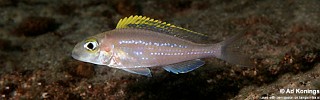
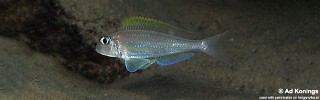
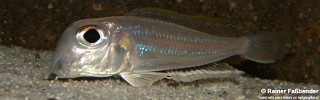
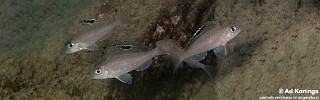
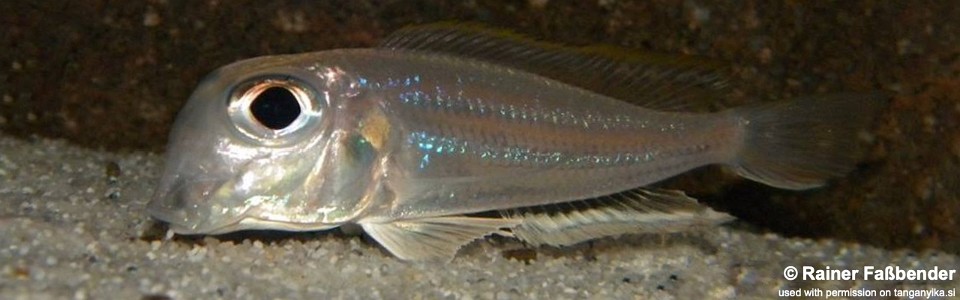



In Germany, Xenotilapia sima has also been mislabeled and sold as Xenotilapia ornatipinnis “Moliro” or “Firestream”.
Photo gallery