Rocky substrates in shallow littoral zones, typically between 0.5 and 5 m depth. Inhabits hard,
algae-covered rocks within the photic zone of the lake.
Geographic distribution:
Restricted to the northern two thirds of Lake Tanganyika. In the Democratic Republic of the Congo it
occurs from Tembwe (Deux) to Uvira. Along the eastern shore it is found throughout Burundi and southwards in
Tanzania at least to Pasagulu Point, and probably as far as Miyako. South of the Lubulungu River, between
Luagala Point and Cape Mpimbwe, it is replaced by the similar species Petrochromis sp. ‘orthognathus ikola’.
Typical adult size:
Reaches a maximum total length of about 16.5 cm.
Sexual dimorphism:
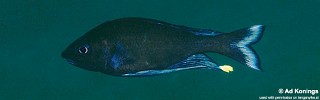
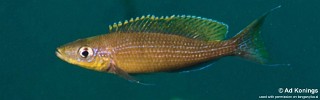
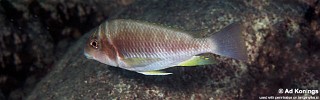
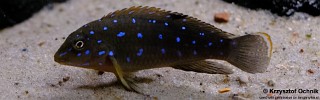
Males grow larger than females and typically show more elongated dorsal and anal fin extensions.
Males may display brighter coloration, especially during breeding periods.
Recommended aquarium size:
May be kept in aquaria from about 600 L upward, provided space, structure and filtration are
adequate. Larger aquaria are advantageous for long-term maintenance.
Aquarium setup:
A rocky aquarium replicating shallow Tanganyika shores, with extensive rock piles forming caves,
grazing surfaces and loosely defined territories, combined with a sandy substrate.
Strong filtration, good water movement and high oxygenation are required. Water should be hard and alkaline
(around pH 8.2) with stable temperatures between 23–26 °C. Bright lighting is beneficial to promote algal
growth on rocks.
Diet:
Strictly herbivorous grazer feeding primarily on aufwuchs, including algae, diatoms and associated
biofilm scraped from rocks. In aquaria, it requires a vegetable-based diet such as spirulina-rich flakes or
pellets and blanched greens; high-protein foods should be avoided.
Breeding:
Maternal mouthbrooder. Spawning takes place on the substrate within the male’s territory, after
which the female immediately collects the eggs into her mouth. The female incubates eggs and larvae for
approximately 4–5 weeks before releasing free-swimming fry.
Aggression:
Highly territorial and aggressive, especially among males. Dominant males vigorously defend large
territories against conspecifics, forming strong dominance hierarchies. Aggression is intense and can result
in serious injury or death in confined conditions.
Special notes:
The species name orthognathus refers to its straight, equal jaws, a distinctive feature
within the genus. The orthognathous mouth, together with densely packed tricuspid teeth, is adapted for
efficient scraping of algal biofilm from rocky surfaces.
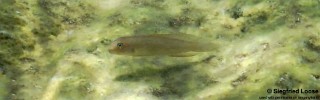
Petrochromis orthognathus is a diurnal, benthopelagic herbivore that typically occurs solitary or in loose
aggregations over rocks. It plays an important ecological role as a primary consumer, contributing to the
regulation of algal growth in the littoral zone of Lake Tanganyika.



Strong filtration, good water movement and high oxygenation are required. Water should be hard and alkaline (around pH 8.2) with stable temperatures between 23–26 °C. Bright lighting is beneficial to promote algal growth on rocks.
Petrochromis orthognathus is a diurnal, benthopelagic herbivore that typically occurs solitary or in loose aggregations over rocks. It plays an important ecological role as a primary consumer, contributing to the regulation of algal growth in the littoral zone of Lake Tanganyika.
Photo gallery