Occurs around Lake Tanganyika, mainly along rocky shores with sandy patches
(intermediate habitat).
Typical adult size:
Males reach up to about 37 cm total length, while females grow to approximately
25 cm.
Recommended aquarium size:
At least 500 L.
Aquarium setup:
The aquarium should provide plenty of open swimming space, as this species is an
active swimmer. In addition, numerous rocks should be arranged to form passages and caves. The
substrate should consist of medium-grain sand. Due to extreme aggression, only one male should be
kept together with several females. Multiple males will usually fight until only the strongest
remains. All fish smaller than about 10 cm are likely to be prey, so only large and robust
Tanganyikan cichlids, such as Cyphotilapia frontosa, are suitable tank mates.
Diet:
Carnivorous. In the aquarium it readily accepts a wide range of foods, including
flakes, pellets, snails, Tubifex, as well as frozen and live foods.
Breeding:
Uniparental mouthbrooder. The female can brood up to about 400 fry, carrying them
for approximately 25–30 days.
Aggression:
Extremely aggressive toward conspecifics and often highly aggressive toward other
fish species.
Special notes:
A tropheine species characterized by its lobed, triangular lips in adults. The
pharyngeal dentition is molar-shaped, with conical teeth on the sides of the pharyngeal bone.
Jaw teeth are conical in adults and bi- or tricuspid in juveniles. The coloration is light beige
with vertical barring, reminiscent of Simochromis or Limnotilapia. It is the largest known member
of the Tropheini.
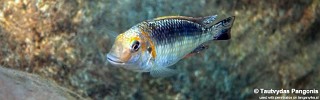
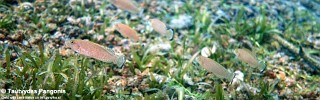
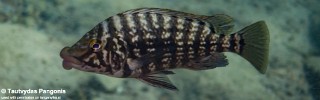
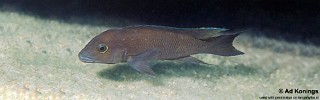
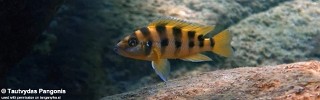



Photo gallery