Deep-water benthopelagic habitats.
Occurs in muddy profundal zones, residing at great depths during the day
and migrating into shallower water at night.
Geographic distribution:
Endemic to Lake Tanganyika with records from multiple areas around the lake.
Typical adult size:
Up to about 7.5 cm total length.
Diet:
Likely feeds mainly on zooplankton and small invertebrates.
Direct stomach content data are lacking, but its trophic level indicates
a mid-level carnivorous to planktivorous diet.
Breeding:
Maternal mouthbrooder.
Details of spawning behavior are unknown and inferred from related
Trematocara species.
Aggression:
Generally peaceful and non-aggressive.
Special notes:
Characterized by hypertrophied sensory pores on the head and a light
bluish triangular streak on the anterior part of the dorsal fin, from
which the species name is derived.
Like other Trematocara, it performs daily vertical migrations and
is difficult to study due to its deep-water lifestyle.
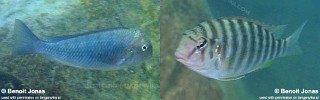
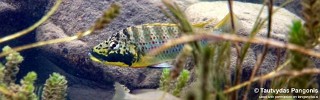
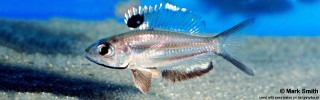
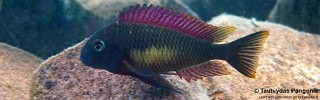
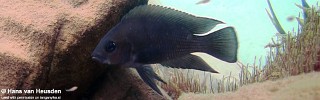



Photo gallery