Very common in shallow sandy and intermediate habitats, generally found
between 2 and 20 m depth.
Geographic distribution:
Endemic to Lake Tanganyika with a lake-wide distribution in suitable
habitats.
Typical adult size:
Males typically grow to about 17 cm total length, but may reach
around 20 cm in aquaria. Exceptional individuals have been reported
up to 25 cm. Juveniles grow fast, reaching about 10 cm within
the first year and becoming sexually mature.
Sexual dimorphism:
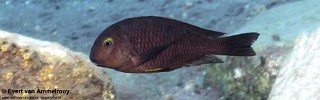
Males grow noticeably larger than females. Territorial and sexually
active males develop a much more intense coloration, which is only
weakly present in females.
Recommended aquarium size:
At least 500 liters; for long-term maintenance an aquarium length of
no less than 160 cm is recommended.
Aquarium setup:
Fine sand substrate is essential, with sandy areas interrupted by
scattered rocks. Despite being more robust than most other
Xenotilapia, the large adult size and potential male aggression
require ample space.
Diet:
Carnivorous. Feeds mainly on small invertebrates, crustaceans and
insects. Examination of stomach contents revealed gastropods, copepods,
ostracods, and insect larvae and adults. Feeding is done by continuous
sifting of the substrate, expelling non-edible material through mouth
and gills.
Breeding:
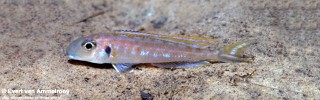
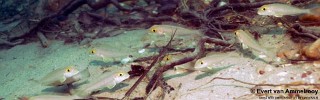
Maternal mouthbrooder. Outside the breeding season, individuals form
large schools in sandy habitats. During spawning periods, groups move
into intermediate habitats between rocks and sand.
Males construct a sand nest to attract females. Spawns usually consist
of about 50–60 eggs. The female incubates the brood for approximately
three weeks and abandons the fry immediately after release.
Aggression:
Generally peaceful towards other species, but males can be aggressive
towards conspecific males.
Special notes:
The largest and most robust member of the genus Xenotilapia.
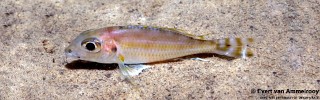
Juveniles have often been confused with Xenotilapia flavipinnis
in the literature, leading to incorrect reports of biparental
mouthbrooding.
A case of commensalism has been recorded with the substrate-spawners
Lepidiolamprologus attenuatus and L. elongatus, whose
brood-caring pairs tolerate X. boulengeri near their nests.
This association may help X. boulengeri avoid attacks from
scale-eating cichlids such as Perissodus microlepis.




Males construct a sand nest to attract females. Spawns usually consist of about 50–60 eggs. The female incubates the brood for approximately three weeks and abandons the fry immediately after release.
A case of commensalism has been recorded with the substrate-spawners Lepidiolamprologus attenuatus and L. elongatus, whose brood-caring pairs tolerate X. boulengeri near their nests. This association may help X. boulengeri avoid attacks from scale-eating cichlids such as Perissodus microlepis.
Photo gallery