Open water of deep rocky shores. Occurs in large schools at depths between 5 and 30 m.
Geographic distribution:
Endemic to Lake Tanganyika; restricted to Cape Tembwe (Democratic Republic of Congo).
Typical adult size:
One of the larger Cyprichromis species, reaching approximately 12–14 cm.
Recommended aquarium size:
Minimum 400 L.
Aquarium setup:
Requires a relatively large aquarium due to size and moderate aggressiveness. Best kept in groups with at least
3–4 males and a higher number of females to distribute aggression and allow natural male interactions.
Provide some rocks for shelter, but ensure ample open swimming space. Substrate type is not critical, as this
species does not feed or spawn on the bottom.
Diet:
Carnivorous. Feeds primarily on zooplankton in the wild, supplemented with small invertebrates when plankton
availability is low. In aquaria, accepts most foods, but live or high-quality frozen foods enhance coloration.
Breeding:
Maternal mouthbrooder. Males establish three-dimensional territories in open water and attract passing females.
Spawning occurs in midwater; females immediately collect fertilized eggs in the mouth. Incubation lasts
approximately three weeks, with broods typically numbering 8–15 fry, occasionally more than 20.
Aggression:
Moderately aggressive, especially during territorial defense. Aggression level is similar to Cyprichromis
leptosoma, but due to larger body size the impact can be greater. Not recommended with weaker sand-dwelling
Tanganyika cichlids.
Special notes:
This species was long regarded as a geographical variant of Cyprichromis sp. 'brilliant jumbo'.
It differs clearly in coloration, body appearance, and its very restricted distribution.
While most western “brilliant jumbo” forms are found between Moba and Cape Tembwe,
Cyprichromis sp. 'speckleback rainbow' is endemic to Cape Tembwe.
According to Ad Konings, this form represents a geographical variant of C. sp. 'brilliant jumbo'.
African Diving Ltd, however, considers it a distinct species, and it is treated as such on this webpage.
Males are highly polychromatic, displaying strong pastel coloration in unique individual combinations.
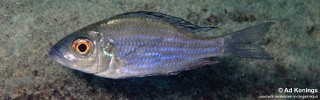
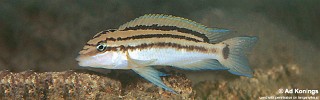
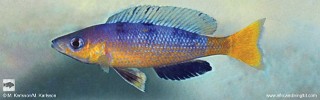
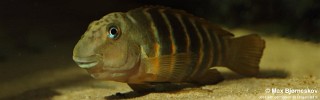
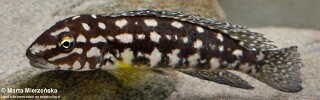



According to Ad Konings, this form represents a geographical variant of C. sp. 'brilliant jumbo'. African Diving Ltd, however, considers it a distinct species, and it is treated as such on this webpage. Males are highly polychromatic, displaying strong pastel coloration in unique individual combinations.
Photo gallery