Deep intermediate habitat at the transition between rocky and sandy or
muddy substrate. Most frequently encountered at depths between
30–70 m.
Geographic distribution:
Endemic to Lake Tanganyika with a lake-wide distribution. Originally
described from the northern part of the lake, but later observations
confirm its presence throughout the lake.
Typical adult size:
In the lake up to about 7 cm. In aquaria males rarely exceed
7–8 cm, females 6–7 cm. Juveniles reach about 2 cm in
three months and become sexually mature after approximately one year.
Sexual dimorphism:
Weakly developed, as typical for biparental mouthbrooders. Males grow
slightly larger and tend to have a straighter head profile, while females
are usually a bit stockier with a more rounded head. No differences in
coloration between the sexes.
Recommended aquarium size:
Around 300 liters, with a minimum aquarium length of 130 cm.
Aquarium setup:
Fine sand substrate with several rocks of varying sizes arranged to form
caves. This species shows considerable intraspecific aggression and is
best kept as a single bonded pair together with other species.
Territorial defense against heterospecifics helps strengthen the pair
bond and reduces conflicts within the pair.
Several caves should be provided so that the female can retreat if the
male directs aggression toward her. Suitable tankmates include other
Xenotilapia species and smaller species of
Cyprichromis and Paracyprichromis.
Diet:
Carnivorous. Feeds mainly on small crustaceans, diatoms and phytoplankton.
Foraging is performed by sifting the sandy substrate, expelling non-edible
material through the mouth and gills.
Breeding:
Biparental mouthbrooder forming stable pairs for several consecutive
broods. Courtship is initiated by the female and involves circling and
fin displays. Spawning usually takes place on sand near a rock.
The female lays 15–25 small eggs in batches of about five, which are
fertilized by the male and immediately taken into the female’s mouth.
She incubates the eggs and larvae for about two weeks, after which the
male takes over incubation for roughly one additional week before the
fry are released. Both parents guard the young for several weeks.
Aggression:
Highly aggressive within the species; best maintained as a single pair.
Toward other species aggression is mainly associated with territorial
defense around the breeding site.
Special notes:
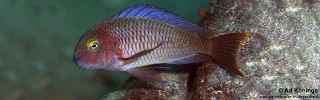
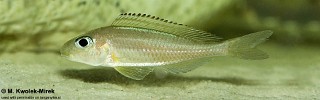
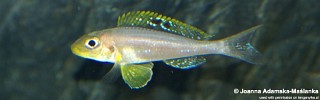
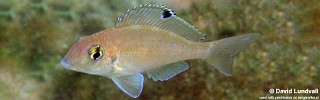
Characterized by a narrow, rounded and prominent snout and an inferior
mouth, which readily distinguishes it from other described species of
Xenotilapia.
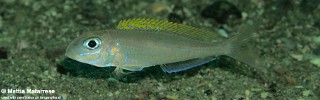
Xenotilapia sp. “fluorescent green”, previously considered a
separate species, is now regarded as conspecific with
Xenotilapia nasus, considerably extending the known distribution
range of this species.



Several caves should be provided so that the female can retreat if the male directs aggression toward her. Suitable tankmates include other Xenotilapia species and smaller species of Cyprichromis and Paracyprichromis.
The female lays 15–25 small eggs in batches of about five, which are fertilized by the male and immediately taken into the female’s mouth. She incubates the eggs and larvae for about two weeks, after which the male takes over incubation for roughly one additional week before the fry are released. Both parents guard the young for several weeks.
Xenotilapia sp. “fluorescent green”, previously considered a separate species, is now regarded as conspecific with Xenotilapia nasus, considerably extending the known distribution range of this species.
Photo gallery