
Lake Tanganyika cichlids — species, locations & maps
Lake Tanganyika cichlids — species, locations & maps
tanganyika.si
Lake Tanganyika cichlids — species, locations & maps.
All images are used with permission of the authors. Unauthorized use is prohibited.
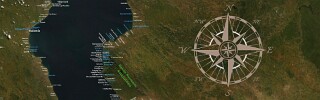
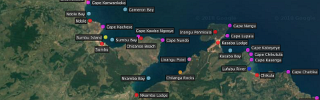
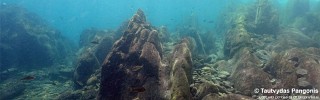
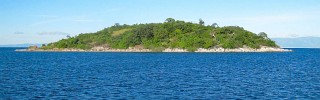

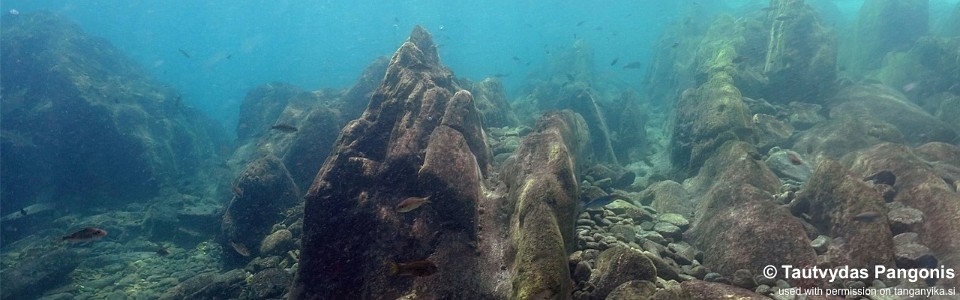



Photo: © by Tautvydas Pangonis

Lake Tanganyika is Africa’s second-largest lake by surface area (only Lake Victoria is larger) and the deepest African lake, holding the greatest volume of freshwater on the continent. It is 673 km long and averages about 50 km in width (maximum 72 km). The lake covers 32,900 km², and its shoreline stretches 1,828 km. Four countries share the lake: Burundi, the Democratic Republic of the Congo, Tanzania, and Zambia. The average depth is 570 m, with a maximum depth of 1,470 m, making it the second deepest lake in the world after Lake Baikal. The total volume of the lake is about 18,900 km³.
Lake Tanganyika is considered one of the clearest freshwater lakes in the world, with visibility exceeding 20 m (in sandy areas the visibility is naturally lower). Although the lake is extremely deep, oxygen is present only in the upper layers: in the south down to roughly 240 m, and in the north only to about 100 m. Below these depths there is no oxygen—and therefore no life. Water temperature in the upper layers ranges from about 24°C in the coldest month (August) to around 27°C in the warmest month (February).
A defining feature of the lake is its hard water, with carbonate hardness (KH)—or more precisely, alkalinity—higher than general hardness (GH). KH: 16°dKH to 19°dKH; GH: 10°dGH to 13°dGH. Consequently, both pH (8.3–9.2) and conductivity (570–640 µS/cm) are high.
Lake Tanganyika is the second-oldest lake in the world (Lake Baikal is older). Over millions of years, the lake level is believed to have dropped dramatically several times (by as much as 500 m), which strongly influenced the evolution of cichlids in the lake.
Among aquarists, Lake Tanganyika is best known for its cichlids, which have adapted through evolution to a wide range of conditions. Tanganyikan cichlids are extraordinarily diverse in both morphology and behavior. Over 200 cichlid species live in the lake, and more than 95% of them are endemic—found only in Lake Tanganyika and nowhere else on Earth.
One key reason for their success is parental care. Depending on the species, eggs are guarded in various ways—often on or near the substrate in caves, or carried in the mouth—where they remain protected and supplied with oxygen. Survival rates are therefore much higher than in fish that provide little or no care.
Another reason is dietary specialization and adaptation to specific habitats. While some Tanganyikan cichlids feed in more typical ways (plankton, insects, other fish, plants…), the lake also contains species with highly specialized feeding strategies, such as fin-eating, egg predation, sponge-feeding, algae grazing and scraping, and more.
Habitats of Lake Tanganyika
Many species are closely tied to particular habitats and may occur only there while being absent from other parts of the lake. The main cichlid habitats in Lake Tanganyika are:
Wave-washed upper rocky zone
This habitat includes the upper three meters of the rocky shoreline. It is primarily inhabited by herbivorous cichlids adapted to life in turbulent, wave-exposed conditions. They feed mainly on algae covering the rocks. The algal community can be broadly divided into filamentous algae and unicellular algae. The unicellular forms are mainly diatoms, often attached to filaments. Filamentous algae may be attached to rocks or drift freely in the water. The most common filamentous types are green algae (Chlorophyta) and blue-green algae (Cyanophyta; also known as cyanobacteria). This zone is very rich in oxygen and typically has a slightly higher pH than other habitats, due to constant wave action and the rapid release of CO₂ from the water.
Among the best adapted cichlids here are the so-called “goby cichlids” (genera Eretmodus, Spathodus, and Tanganicodus). They are mouthbrooders, and a characteristic feature is that both parents carry the fry.
Other cichlids present in this habitat include species from the genus Pseudosimochromis (very similar to the better-known Tropheus), some Petrochromis (including Petrochromis macrognathus, which can reach 21 cm and is among the largest algae-scraping cichlids), Ophthalmotilapia (most commonly O. ventralis), and others.
Shallow rocky zone
Around most locations of the lake, the rocky habitat forms moderately steep shores. Sand makes up less than 25% of the substrate; the area is dominated by stones and massive rock piles stacked on each other, creating networks of caves, crevices, and narrow passages. Aufwuchs on the rocks is almost always free of sediment, and the rocks often carry only a thin layer of green algae. Because food is relatively scarce, only the strongest cichlids can secure territories.
The most common group in this habitat is Petrochromis—the largest and most aggressive herbivorous cichlids in the lake—present in virtually every rocky area. Another very abundant and aquaristically popular group is Tropheus. These are also herbivores; all species except T. duboisi live in the upper 20 m of rocky habitat. Petrochromis and Tropheus are mouthbrooders: females carry the young in their mouths until the fry become free-swimming. Other common cichlids here include the widespread Astropilapia leptura (notable for biparental mouthbrooding) and cichlids of the genus Ophthalmotilapia (most commonly O. boops and O. ventralis).
Another major group inhabiting this area are the Lamprologines. Unlike the mouthbrooders above, most Lamprologines are substrate spawners: they lay eggs on the substrate, typically in a cave where eggs and fry are easier to defend from predators. In contrast to the herbivorous Petrochromis and Tropheus, Lamprologines in this habitat are mostly carnivores or plankton feeders.
One of the most numerous Lamprologine groups are the so-called “princesses of the lake,” more precisely the N. savoryi complex, found along almost every rocky shoreline (well-known representatives include N. pulcher, N. savoryi, N. gracilis, N. marunguensis, and others). They feed on small invertebrates gathered from the aufwuchs or—more often—captured in the water column above the substrate. Because of this, they are not strictly dependent on rocks for food, but they remain near rocky areas because they need shelter from predators and suitable spawning sites. They live in colonies and are always found in larger groups; the entire colony participates in fry care.
Another important Lamprologine group of the rocky habitat includes N. leleupi, N. cylindricus, N. mustax, and closely related species. Unlike the “princesses,” these are not plankton-dependent. They feed on various invertebrates found within the aufwuchs covering rocks or in rock crevices. They do not form colonies; they live more solitary lives. Males accept only a female as a mate, and spawning takes place in caves that belong to the female. In the lake, males leave once the fry are large enough to survive independently, while in aquaria the pair bond can often last much longer—sometimes for life.
Altolamprologus (A. calvus and A. compressiceps) are also characteristic rocky-habitat cichlids and very popular in aquaria. Their laterally compressed body allows them to slip through narrow crevices to reach prey inaccessible to other cichlids. They feed mainly on small crustaceans and other invertebrates, and will also take the occasional fry of other cichlids.
Other rocky-habitat Lamprologines commonly seen in aquaria include species of Telmatochromis, Chalinochromis, and Julidochromis. Telmatochromis feed largely on filamentous algae and also on the eggs of other cichlids. Interestingly, they often target the eggs of much larger predators such as Lepidiolamprologus elongatus. Smaller Telmatochromis resemble juvenile L. elongatus, and because predator broods are often large (and sometimes a new clutch is laid while the previous brood is still being guarded), the predators may tolerate these “look-alikes” as if they were their own young—allowing Telmatochromis to steal or eat eggs from the new clutch.
Chalinochromis and Julidochromis (in rocky habitat you may encounter J. marlieri, J. transcriptus, and J. dickfeldi) have found a feeding niche in sponges. Sponges can be patchy and sometimes rare, but because few cichlids specialize on them, these genera can occupy a niche in many parts of the rocky zone.
The final major group in the rocky habitat are predators. The most widespread in this environment (found throughout the lake) is Lepidiolamprologus elongatus. Males reach around 20 cm. Adults feed primarily on other fish, but also take various invertebrates. Unlike many other species that hide eggs in caves or mouths, these predators lay eggs on open rock surfaces. Their size and robustness allow them to defend eggs even in such exposed locations.
Deep rocky zone
This is rocky habitat deeper than 20 m. Rocks are covered with sediment, and small patches of sand or mud may occur between rocks (together not more than 25%). Because light is weak at these depths, rocks are mainly covered by brown algae; green algae are absent or very rare. Among non-cichlids, catfish of the genus Synodontis are often seen at these depths.
The most common and best-known cichlids in this habitat include:
Shallow transition zone
This is a shallow habitat (not deeper than 5 m) that combines sandy and rocky substrate and is often rich in sediment. Such areas are typically found near river mouths and in shallow bays. They are frequently vegetated (most commonly Vallisneria spiralis, Ceratophyllum demersum, Hydrilla verticillata, etc.). Although some algae-feeding cichlids occur in these sediment-rich areas, they are much more common in true rocky habitats.
Shallow water and sediment accumulation generally prevent cichlids from building caves beneath rocks. Therefore, among cave-spawning cichlids, only a few are commonly present here: Telmatochromis dhonti, T. macrolepis, and Lepidiolamprologus pleuromaculatus.
Well-known cichlids of this habitat include species of the genus Callochromis (most commonly C. macrops), famous for building volcano-shaped nest structures. The most common cichlid here is likely Ctenochromis horei.
Transition zone
A habitat that mixes sandy and rocky substrate. Rocks (aufwuchs) are usually covered by a thin layer of sand. This area is most densely populated at depths from about 5 to 40 m. Among mouthbrooders, this habitat includes cichlids of the genus Cyathopharynx (C. foae and C. furcifer), also known for building huge volcano-shaped nests; some Petrochromis; Lobochilotes labiatus; Aulonocranus dewindti; Ophthalmotilapia nasuta; Cunningtonia longiventralis; Xenotilapia spilopterus; and others.
This habitat also includes Lamprologines such as Neolamprologus modestus, N. christyi, N. tetracanthus, Lamprologus caudopunctatus, Lamprologus leloupi, Neolamprologus tretocephalus, N. sexfasciatus, N. toae, N. niger, Julidochromis regani, and Julidochromis ornatus.
Predators are also present here. Lepidiolamprologus attenuatus is one of the most common in this habitat.
Sandy habitat
An area largely covered by sand (with the occasional rock). Few cichlids live here, because many species require some form of shelter—most often provided by rocks. Therefore, sandy areas are mainly inhabited by cichlids that live in larger groups. The two smallest species of the genus Callochromis (C. pleurospilus and C. sp. “pleurospilus tanzania”) occur here. They also build volcano-shaped nests and feed by filtering/sifting sand. Sandy areas are also rich in species of the genus Xenotilapia.
The sandy habitat is also home to the world’s largest cichlid, Boulengerochromis microlepis. It can grow to 70 cm and weigh more than 3 kg, and it is a predator.
Shell-bed habitat
A habitat with empty snail shells (mostly from Neothauma tanganyicense). These shell beds typically cover sandy and muddy bottoms, and only rarely occur near rocks. Some areas contain an enormous number of shells, while in others shells are scarce. Different cichlid species have adapted in different ways to life among shells.
For shell-dwelling cichlids (“shellies”), shells function as both refuge and as a site for spawning and fry protection, similar to how caves serve larger cichlids. As is probably obvious, this habitat is mostly occupied by cichlids small enough to hide inside shells (with exceptions—for example, in some species only females are small enough for shells, while males use other shelter). Due to their fascinating behavior and small size, shell-dwellers are very popular in aquaria and can be kept even in smaller tanks.
Two very common aquarium shell-dwellers from this habitat are Neolamprologus multifasciatus and Neolamprologus similis. Other well-known “shellies” include Lamprologus brevis, Lamprologus ocellatus, Lamprologus stappersii, and others.
A particularly interesting species is Lamprologus callipterus, sometimes called the “shell thief.” Only the females live inside shells (they reach about 6 cm), while males (up to 15 cm) are too large. However, males are strong enough to carry shells from other areas into their own territory—effectively stealing shells and often stealing females along with them.
Muddy bottom
Muddy bottoms are common in Lake Tanganyika, and most of the lake floor deeper than 60 m consists of mud. The mud is often mixed with sand, allowing cichlids to dig holes and tunnels that serve as hiding places. The best-known cichlids of this habitat are Neolamprologus kungweensis and Neolamprologus signatus. When available, these cichlids may also use empty shells as shelter. They feed mainly on zooplankton and small invertebrates, and spawn in burrows they excavate in the mud.
This habitat also contains certain Xenotilapia species and some other cichlids, though they are less commonly encountered.
Unknown depths
This zone is the least explored. Cichlids from these depths are specialized for feeding in darkness or under minimal light. The best-known cichlids of the “unknown depths” include species from the genera Trematocara, Greenwoodochromis, and Benthochromis (also known as “princesses of the deep”). Among predators, this zone includes species of the genus Bathybates.
Beautiful videos of Lake Tanganyika