Shallow, sediment-free rocky shores densely covered with algae.
Geographic distribution:
Petrochromis sp. 'kasumbe rainbow' is found along the 133 km long coastline between Kabwe (near Cape
Mpimbwe) and Kalala Island (Kala Bay South). The name P. sp. 'kasumbe rainbow' is used by African
Diving, while the same species is referred to as Petrochromis sp. 'macrognathus rainbow' by
Ad Konings.
Typical adult size:
Males reach at least 15–18 cm total length in imported specimens. Females are approximately
20% smaller.
Sexual dimorphism:
Males grow larger than females and develop a more matt overall coloration with less distinct
vertical barring. Females remain smaller and show a more uniform, subdued coloration.
Recommended aquarium size:
Although smaller individuals may be kept in a 500 liter aquarium, a minimum size of
800 liters is preferable.
Aquarium setup:
A large aquarium with extensive rockwork forming stable territories and grazing surfaces.
Hard, alkaline water (around pH 8.2) with very strong filtration and good water movement is
required. Temperature should be maintained between 23–26 °C.
Diet:
A highly specialized herbivore feeding on the algal layer covering rocks. In aquaria, the
diet should consist mainly of vegetable-based foods, especially spirulina-rich flakes and
pellets. Due to the very long intestine, high-protein foods must be given only very sparingly.
Appetite is usually high, although some individuals may feed frugally and lose condition.
Breeding:
Maternal mouthbrooder. The clutch usually comprises around 15 eggs. After spawning, the
female leaves the male’s territory and broods independently. As in other members of the genus,
and unlike Tropheus, the male bears true ocelli on the anal fin, which attract the female toward
the genital region during spawning and maximize fertilization.
Aggression:
Extremely aggressive, especially toward conspecifics. The overall behavior closely resembles
that of Petrochromis polyodon and Petrochromis macrognathus, which are among the most aggressive
cichlids in Lake Tanganyika. Even in large, overcrowded aquaria, continuous losses of weaker
individuals may occur due to persistent harassment by dominant fish.
Special notes:
Petrochromis sp. 'kasumbe rainbow' belongs to a specialized group within the genus and shares
characteristics with both the P. polyodon types and the P. macrognathus types. From the former,
it shows a brown-yellow overall coloration that may appear slightly mottled, while from the
latter it inherits the characteristic down-turned snout and mouth shape.
Compared to true Petrochromis macrognathus, this species appears less specialized, as the mouth
is slightly narrower and may nearly close at the tip. The ascending process of the premaxilla
is also less pronounced. Adult males show a more matt coloration with less visible vertical bars
than in P. macrognathus.
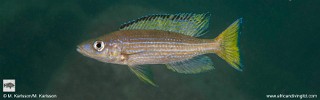
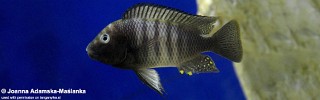
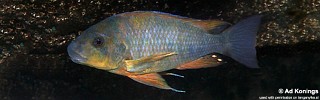
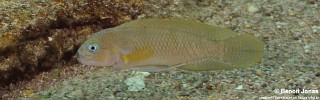
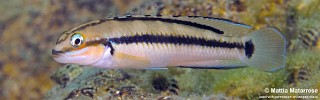



Compared to true Petrochromis macrognathus, this species appears less specialized, as the mouth is slightly narrower and may nearly close at the tip. The ascending process of the premaxilla is also less pronounced. Adult males show a more matt coloration with less visible vertical bars than in P. macrognathus.
Photo gallery