Muddy habitats above soft bottoms, where the species digs
extensive tunnel systems and underground galleries.
Geographic distribution:
Found all around the shores of Lake Tanganyika in suitable
muddy habitats, with no known geographical variation.
Typical adult size:
Up to 10 cm in the wild; aquarium specimens may reach
12–13 cm.
Sexual dimorphism:
No clear sexual dimorphism. According to aquarium
observations, females may show black pigmentation on the
first dorsal fin rays and usually remain slightly smaller
than males.
Recommended aquarium size:
200 liters or larger.
Aquarium setup:
Fine sand substrate is essential, interrupted by scattered
rock groups. The layout should allow digging and the
construction of tunnels.
Diet:
Feeds on small invertebrates extracted from mud and silt.
The species engulfs substrate and swallows edible items,
often ingesting large amounts of mud as ballast.
Breeding:
Bi-parental mouthbrooder. Pairs dig extensive tunnel systems
in muddy substrate, inside which spawning takes place.
Both parents incubate and regularly exchange eggs,
larvae, and fry. Clutches may reach 250–300 eggs.
Aggression:
Relatively peaceful compared to other limnochromines,
though territorial around the burrow and breeding site.
Special notes:
Distinguished within Limnochromini by its elongated body,
rounded head, sub-terminal mouth, and finger-like
extensions of the pectoral fin rays, which are used as
sensory organs to detect prey in the substrate.
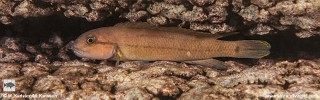
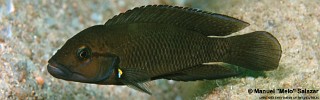
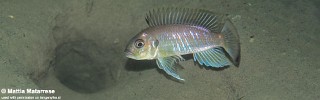
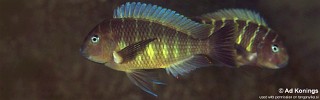
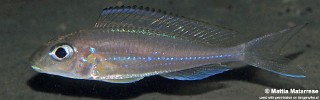



Photo gallery