tanganyika.si

Lake Tanganyika cichlids — species, locations & maps

Lake Tanganyika cichlids — species, locations & maps
By genera By locations Locations Maps Posters Interactive map
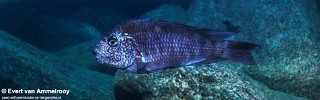
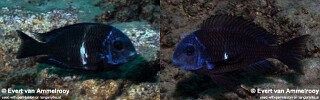
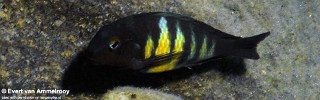
Petrochromis sp. 'red' Mahale Mountains NP.jpg Petrochromis sp. 'texas' Mahale Mountains NP.jpg Telmatochromis cf. temporalis 'Mahale Mountains NP'.jpg Tropheus duboisi 'Mahale Mountains NP'.jpg Tropheus hybrids 'Mahale NP'.jpg
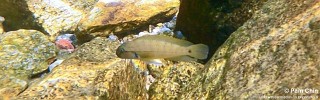
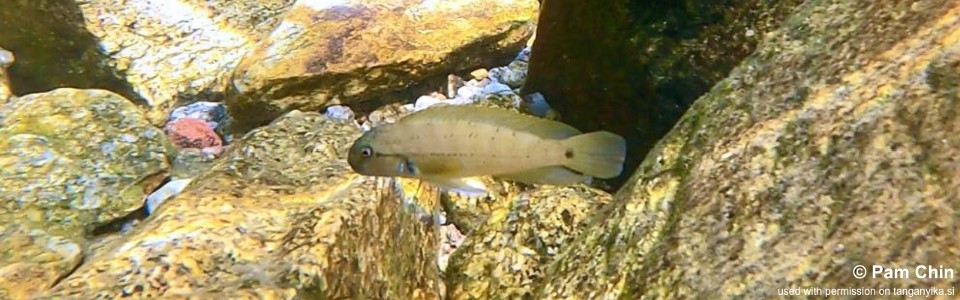
Previous pageNext pageTelmatochromis cf. temporalis 'Mahale Mountains NP'
Tribe / Genus: Lamprologini / Telmatochromis
Type locality: Kinyamkolo (Mpulungu) and Mbity Rocks, Lake Tanganyika, Zambia.
Biotope: Shallow rocky shores. A dwarf ecotype also inhabits shell beds.
Geographic distribution: True Telmatochromis temporalis is on tanganyika.si regarded as restricted to its type locality at Mpulungu (Kinyamkolo) and Mbity Rocks, Zambia.
All other similar populations belonging to the T. temporalis complex around Lake Tanganyika are treated here as Telmatochromis cf. temporalis.
Typical adult size: Up to about 10 cm total length. Females are approximately 20 % smaller.
A shell-dwelling dwarf ecotype reaches about 6 cm.
Sexual dimorphism: Males grow larger than females, which remain about 20 % smaller and more slender.
Recommended aquarium size: 100 L for a pair.
Aquarium setup: Rocky layout with numerous stones forming caves. Fine sand substrate, with the addition of empty snail shells.
Diet: Omnivorous. Feeds on zooplankton, while adult specimens also graze on algae and other microorganisms living in the aufwuchs.
Breeding: Substrate spawner. Spawning takes place in caves or empty snail shells. The female deposits approximately 100–200 eggs, which are fertilized by the male.
Both parents take care of the brood.
Aggression: Highly aggressive, slightly less so than T. dhonti, but during spawning and brood care it becomes strongly aggressive toward all other fish in the aquarium.
Special notes: The Telmatochromis temporalis complex shows extreme morphological variability, including the repeated evolution of dwarf shell-dwelling ecotypes.
According to genetic and morphological studies (as summarized by African Diving Ltd), dwarf populations are more closely related to the normal-sized population at the same locality than to dwarf populations elsewhere; therefore, dwarf forms do not constitute a single distinct species.
In Zambia, sympatric dwarf and normal-sized populations show stronger differentiation and are treated by different authors either as one species (Konings) or as two species (Takahashi).
In the aquarium hobby, dwarf shell-dwelling ecotypes of the T. temporalis complex are still widely referred to as Telmatochromis sp. 'temporalis shell'.
On this site, only populations from the type locality (Mpulungu and Mbity Rocks) are regarded as true T. temporalis; all other similar forms are treated as Telmatochromis cf. temporalis.
The population from Cape Chaitika is currently treated as Telmatochromis brachygnathus. However, it cannot be excluded that future taxonomic revision may demonstrate this taxon to be conspecific with T. temporalis; until such evidence is available, it is here regarded as a valid species.
Telmatochromis burgeoni is regarded as a junior synonym of T. temporalis, following Ad Konings.

Photo: © Pam Chin
tanganyika.si
Lake Tanganyika cichlids — species, locations & maps.
All images are used with permission of the authors. Unauthorized use is prohibited.
Quick links
By genera By locations Locations Maps Posters Interactive map
Contact
Email Facebook Instagram
© tanganyika.si