Sandy areas of the shallow intermediate habitat at depths of approximately 5–20 m,
where empty Neothauma snail shells are present. A very similar species, Lepidiolamprologus attenuatus,
is instead associated with rocky habitats.
Geographic distribution:
Lake Tanganyika, primarily around the Kipili area on the central to southern Tanzanian
coast, between Cape Mpimbwe and Mtego Bay; later observations suggest a wider distribution along
the central–southern Tanzanian shoreline.
Typical adult size:
Reaches approximately 10–12 cm total length, typically around 11 cm.
Sexual dimorphism:
Sexes are similar in appearance; males are about 20% larger than females.
Recommended aquarium size:
120 L for a pair, provided the pair is already established. For a community aquarium,
a volume of at least 300 L is recommended.
Aquarium setup:
Due to its moderate size, this species is regularly exported for aquaristics. A pair can
be kept in a relatively small aquarium if already bonded, but in group or community setups a larger
aquarium is required to limit aggression. Use a sandy substrate with several rocks. It can be kept
with other Lake Tanganyika cichlids, but cohabitation with other Lepidiolamprologus species should be
avoided because of the risk of hybridization.
Diet:
Carnivorous predator feeding on smaller fishes and invertebrates. In the aquarium it
accepts quality commercial foods as well as frozen foods such as krill.
Breeding:
Breeds in pairs, similar to other lamprologines, but differs by depositing eggs on the
outside of empty snail shells rather than on rock surfaces. Both male and female are too large to
enter the shell. Both parents guard the eggs. After hatching, the fry are moved into the interior of
the shell, which is partially buried in the sand in a manner similar to Lamprologus ocellatus.
Clutch size is relatively small for the genus, around 50 eggs.
Aggression:
Can be quite aggressive toward other aquarium inhabitants.
Special notes:
Often confused with Lepidiolamprologus attenuatus, but appears behaviorally and
morphologically closer to Lepidiolamprologus pleuromaculatus, particularly to northern populations.
The provisional name refers to an assumed relationship with Lepidiolamprologus meeli, although this
form is smaller and stockier. Diagnostic characters are not firmly established, and the shell-dwelling
behavior may represent an ecological adaptation rather than a fixed species trait.
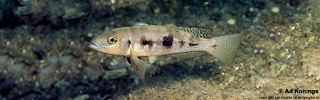
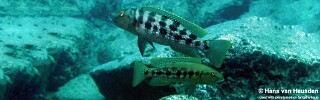
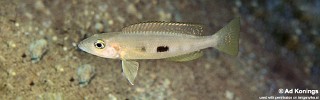
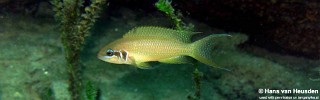
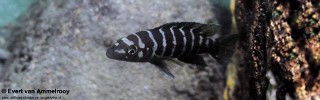



Photo gallery