Open water above rocky and pebbly substrates. Typically occurs in moderately
shallow water with a mean depth of around 10 m, but can be encountered and angled
at depths of 18–20 m.
Geographic distribution:
Lake-wide distribution throughout Lake Tanganyika. Recorded from numerous
localities around the entire shoreline.
Typical adult size:
Up to about 26 cm TL (males) and 22 cm TL (females). Average wild size is
approximately 19 cm for males and 17 cm for females; larger sizes are commonly
reached in aquaria.
Sexual dimorphism:
Very weak. Sexes are similar in appearance, with males growing slightly larger
than females.
Recommended aquarium size:
Minimum 600 L; very large aquaria are recommended due to adult size and activity.
Aquarium setup:
Fine sand substrate with a few larger rocks placed on the bottom.
Open swimming space is essential.
Despite its generally calm nature, this species should not be kept with very small
Tanganyikan cichlids, which may be preyed upon.
Diet:
Carnivorous predator. Feeds mainly on small fishes (including clupeids such as
Stolothrissa) and zooplankton.
In aquaria readily accepts a wide range of live and frozen foods.
Juveniles and subadults often feed primarily on plankton and may form large groups
in the wild.
Breeding:
Biparental mouthbrooder. Pairs separate from groups to spawn.
Eggs and early larvae are incubated mainly by the female; after the first release,
the approximately 9 mm fry (10–12 days post-spawning) often take refuge primarily in
the male’s mouth.
Clutch size usually ranges from about 100 to 200 eggs.
Aggression:
Among the more peaceful Tanganyikan cichlids. Interspecific aggression is very low;
intraspecific aggression is limited to mild display behavior.
Special notes:
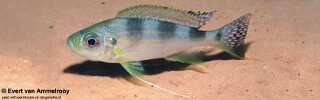
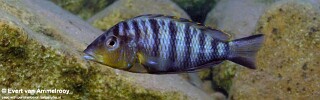
Haplotaxodon microlepis was long the only species in the genus until
H. trifasciatus was described. The latter reportedly differs by a higher body
and three (instead of four) dark vertical bars below the dorsal fin, though the
taxonomic status remains debated.
This species is relatively rare in aquaria and can be sensitive to water quality,
particularly during water changes and exposure to additives.
Although shy, it acclimates well and grows rapidly once settled.
Best maintained in large, quiet aquaria with non-aggressive tank mates.
Northern populations tend to show a stockier body and more intense coloration,
including a stronger blue sheen and yellow suffusion on the head. These differences
may represent geographical variation rather than clear species-level separation.





This species is relatively rare in aquaria and can be sensitive to water quality, particularly during water changes and exposure to additives. Although shy, it acclimates well and grows rapidly once settled. Best maintained in large, quiet aquaria with non-aggressive tank mates.
Northern populations tend to show a stockier body and more intense coloration, including a stronger blue sheen and yellow suffusion on the head. These differences may represent geographical variation rather than clear species-level separation.
Photo gallery