Occurs exclusively in deeper water, typically at depths between 20 and 60 metres (possibly
deeper), in an intermediate habitat. This environment consists of sandy or muddy substrate combined
with small and larger rocks that form crevices and caves.
Typical adult size:
Males grow up to about 10 cm; females are usually 1–2 cm smaller.
Recommended aquarium size:
240 L
Aquarium setup:
The aquarium should contain plenty of rocks arranged to create numerous caves, with fine sand
as substrate. Due to pronounced intraspecific aggression, this species should be kept only as a pair.
In sufficiently large aquaria, it may be housed together with other robust Tanganyika cichlids,
although the pair will vigorously defend its territory. As a deep-water species, subdued lighting
is recommended.
Diet:
Omnivorous. Feeds on algae, small crustaceans, insect larvae, molluscs, and occasionally small
fish such as fry.
Breeding:
Cave spawner. Brood size is usually fewer than 40 juveniles.
Aggression:
Territorial and aggressive toward conspecifics, and defensive toward other fishes, especially
during breeding. However, in captivity this species is reported to be markedly milder in temperament
than N. ventralis, which has made it comparatively easier to maintain and breed.
Special notes:
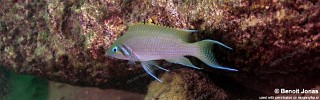
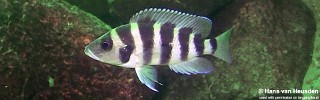
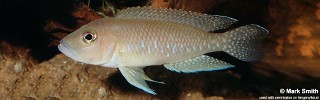
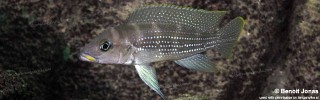
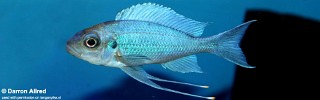
Neolamprologus sp. “ventralis kasanga” resembles N. ventralis but is
characterised by distinctly shorter ventral fins.
Substantial differences from N. ventralis have nevertheless been reported. In
N. sp. “ventralis kasanga”, both sexes have much shorter ventral fins; females are
considerably smaller and less colourful than males. In contrast, in N. ventralis males and
females are often similar in size and colour, or males are only slightly larger and more colourful.
Additional differences include a shorter dorsal and anal fin height, a deeper body, a shorter snout,
and a lower lateral-line scale count (31–32 versus 34–36 in N. ventralis). In captivity,
N. sp. “ventralis kasanga” is reported to be markedly milder in temperament than
N. ventralis, which has made it comparatively easy to breed.



In sufficiently large aquaria, it may be housed together with other robust Tanganyika cichlids, although the pair will vigorously defend its territory. As a deep-water species, subdued lighting is recommended.
Substantial differences from N. ventralis have nevertheless been reported. In N. sp. “ventralis kasanga”, both sexes have much shorter ventral fins; females are considerably smaller and less colourful than males. In contrast, in N. ventralis males and females are often similar in size and colour, or males are only slightly larger and more colourful.
Additional differences include a shorter dorsal and anal fin height, a deeper body, a shorter snout, and a lower lateral-line scale count (31–32 versus 34–36 in N. ventralis). In captivity, N. sp. “ventralis kasanga” is reported to be markedly milder in temperament than N. ventralis, which has made it comparatively easy to breed.
Photo gallery