Lepidiolamprologus sp. 'meeli-boulengeri' Karilani Island Lepidiolamprologus sp. 'meeli southeast' Karilani Is.
Tribe / Genus:
Lamprologini / Lepidiolamprologus
Biotope:
Sandy areas of the shallow intermediate habitat at depths of about 5–20 m, where
empty Neothauma snail shells are present (often as scattered shells rather than dense shell beds).
Geographic distribution:
Southeastern Lake Tanganyika.
Typical adult size:
Males can reach about 8.5 cm total length and are then often too large to fit inside
the shells; females remain smaller and are the ones that live in shells.
Sexual dimorphism:
No clear external differences other than size.
Recommended aquarium size:
100 L for a pair.
Aquarium setup:
Provide fine sand and several empty snail shells, which adult fish use as shelter and
for breeding. Because of intraspecific aggression, especially between males, it is recommended to
keep no more than one male per aquarium. In a sufficiently large aquarium (about 200–300 L), they
can be kept with other Lake Tanganyika cichlids that occupy different zones of the tank.
Diet:
Carnivorous. Feeds on various invertebrates and also on the fry of other cichlids.
In the wild it feeds while hovering about 5–10 cm above the substrate; stomach content analyses
have revealed invertebrates as well as juveniles of other shell-brooders, and even adult
“L.” multifasciatus. In the aquarium, offer a range of live and frozen foods (e.g., Artemia,
Cyclops, Mysis).
Breeding:
Shows both monogamy and polygyny; a male may control a harem of up to five females.
A male establishes a territory by initially occupying a single shell and excavating a crater
around it, uncovering additional shells in the process. Females then use a small group of shells
(reported up to a maximum of about 10) and defend this as a brood site within the male’s territory;
brood sites may be spaced roughly 50–300 cm apart and can be controlled by one male. Spawning takes
place inside one of the female’s shells. The male does not enter the shell but fertilizes the eggs
from outside by releasing milt at the shell opening while the female deposits the eggs inside. The
male does not take part in guarding the fry. Fry-guarding females often become very dark in color.
Aggression:
Males can be aggressive toward each other. Toward other cichlids, aggression is mainly
expressed during territorial defense; it does not pursue and hunt other species outside its defended area.
Special notes:
In “Tanganyika cichlids in their natural habitat (3rd edition)”, Ad Konings treated this
form as a geographical variant of Lepidiolamprologus meeli, but in his 2017 article “Confusing
Lepidiolamprologus” he stated it should be regarded as a distinct species and used the name
Lepidiolamprologus sp. “meeli southeast”, noting differences (with the number of body scales
highlighted as the most important). In the aquarium hobby it has been present for a longer time,
often under the names Lepidiolamprologus hecqui or Lepidiolamprologus meeli, with “hecqui” being
described here as a longstanding misidentification. It is described as a separate species from the
southeastern part of the lake, while Lepidiolamprologus hecqui is presented as a “museum” species
that has not been found again in the lake after its original description.
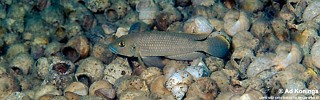
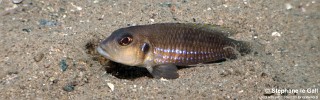
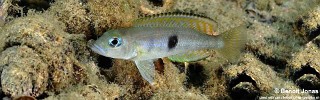
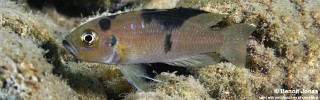
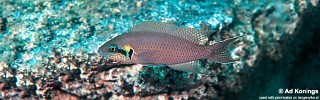



Photo gallery