Predominantly inhabits deep sandy and muddy bottoms. Recorded at depths
down to 160 m, but can also be found in shallow water at about
5–15 m. Appears to prefer deeper water during the day and migrate
into shallower areas at night, likely for feeding.
Geographic distribution:
Endemic to Lake Tanganyika with a lake-wide distribution in suitable
habitats.
Typical adult size:
Males reach up to about 13 cm total length, while females remain
slightly smaller. Juveniles grow to approximately 8 cm within one
year and reach sexual maturity at that size.
Sexual dimorphism:
Males display a vividly colored dorsal fin that shimmers depending on the
angle of light, along with horizontal pearly lines along the body.
Females are entirely silvery and show 5–7 indistinct black spots in the
dorsal fin.
Recommended aquarium size:
Around 250 liters, with a minimum aquarium length of about
130 cm for a small group.
Aquarium setup:
Fine sand substrate with a few small, smooth stones acting as visual
boundaries between territories. Stones must not have sharp edges to
avoid damage to the large and delicate eyes. In the aquarium the species
is relatively calm, and males will only chase each other without causing
injuries.
Diet:
Carnivorous. Possesses a short digestive tract (about 90 mm),
indicating a diet mainly consisting of insect larvae, small crustaceans
and other invertebrates. Feeds by sifting the substrate and expelling
non-edible material through the gills.
Breeding:
Maternal mouthbrooder. Males occupy small, unmarked territories and
display to passing females, but do not construct nests. Females brood
approximately 50 eggs for about three weeks before releasing the fry. No
post-release brood care has been observed. Rare cases of mouthbrooding
males have been reported but are considered abnormal.
Aggression:
Generally peaceful, both toward conspecifics and other species.
Special notes:
One of the first deep-water Xenotilapia species to be imported in
larger numbers for the aquarium hobby. Compared to several congeners, it
is less shy and less sensitive, making it well suited for deep-water
community aquaria with calm cichlids.
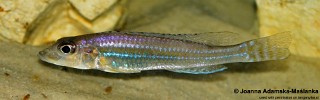
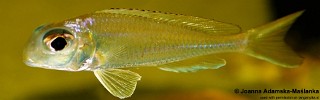



Photo gallery