tanganyika.si

Lake Tanganyika cichlids — species, locations & maps

Lake Tanganyika cichlids — species, locations & maps
By genera By locations Locations Maps Posters Interactive map
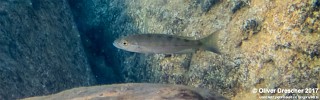
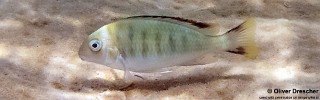
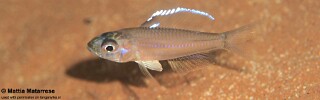
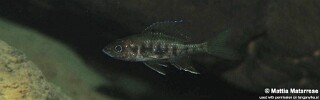
Paracyprichromis nigripinnis 'Jakobsen's Beach'.jpg Perissodus microlepis 'Jakobsen's Beach'.jpg Pseudosimochromis marginatus 'Jakobsen's Beach'.jpg Trematocara stigmaticum 'Jakobsen's Beach'.jpg Trematocara zebra 'Jakobsen's Beach'.jpg
Previous pageNext pagePseudosimochromis marginatus 'Jakobsen's Beach'
Tribe / Genus: Tropheini / Pseudosimochromis
Type locality: Manga, Lake Tanganyika.
Biotope: Shallow intermediate habitat with rocks covered by sand and mud. Algae occur on stones and pebbles that are kept relatively free of sediment by wave action in very shallow water.
Geographic distribution: Restricted to the northern half of Lake Tanganyika.
Described from a single specimen collected at the Ubwari Peninsula in the Congo. Occurs along the Congo shore between Uvira and Kalemie and along the eastern coast between Nyanza-Lac (Burundi) and Lyamembe (Tanzania).
Typical adult size: Maximum total length of about 11 cm.
Sexual dimorphism: Sexual dimorphism is present but less pronounced than in Pseudosimochromis babaulti.
Males possess a short black stripe in the spiny part of the dorsal fin. Females lack this stripe but may show cherry-red patches on the cheeks and anal fin.
Recommended aquarium size: Half-grown specimens can be kept temporarily in aquaria of around 300 liters, but larger aquaria are preferable long term due to strong intraspecific aggression.
Aquarium setup: Rock piles forming narrow holes and passages that allow females to escape male harassment, and surfaces that promote algal growth.
Diet: Primarily herbivorous. Stomach inventories reported large quantities of filamentous algae, with additional items such as snail eggs, insects, and fish remains.
In the aquarium the species readily accepts various foods, but the staple diet should consist largely of vegetable matter, preferably spirulina-based preparations.
Breeding: Maternal mouthbrooder. Spawning behavior is similar to that of other members of the shallow intermediate habitat group, but little detailed information on brooding behavior is available.
Aggression: Males are territorial and extremely aggressive toward conspecifics and other herbivores.
Territorial males are found very close to the shoreline, often in water less than two meters deep. Territories are small, with a diameter of about two meters, and consist of a few stones forming a relatively flat platform.
Special notes: Closely resembles Pseudosimochromis babaulti in coloration, but differs by the presence of a black marginal band in the dorsal fin of males.
Individuals with irregular black blotches on the body are reported from several localities, a pattern also observed occasionally in Pseudosimochromis babaulti.

Photo: © Oliver Drescher
tanganyika.si
Lake Tanganyika cichlids — species, locations & maps.
All images are used with permission of the authors. Unauthorized use is prohibited.
Quick links
By genera By locations Locations Maps Posters Interactive map
Contact
Email Facebook Instagram
© tanganyika.si