Intermediate habitats and coastal bays with abundant vegetation; commonly found in
sediment-rich shallow waters and often over sandy substrate lacking rocky shelters.
Geographic distribution:
Occurs all around the coastline of Lake Tanganyika, with no known geographical races.
Typical adult size:
Males reach up to about 26 cm total length, while females remain smaller at around
18–20 cm.
Recommended aquarium size:
At least 600 L; a tank length of around 2 meters is recommended for fully grown
specimens.
Aquarium setup:
Use fine sand as substrate, with selected areas planted with aquatic vegetation.
Strong filtration is required due to the species’ size and feeding behavior. It should be kept
together with other robust Lake Tanganyika cichlids.
Diet:
Omnivorous. Feeds primarily on plants and algae, but also consumes various
invertebrates. Stomach analyses revealed plant material, filamentous algae, and animal matter.
Breeding:
Maternal mouthbrooder, as in all tropheines. Males construct sand nests and defend
spawning territories. The clutch may exceed 100 eggs, each approximately 6 mm in diameter.
Breeding males and mouthbrooding females can be found throughout the year.
Aggression:
Highly aggressive toward conspecifics, but relatively tolerant of other species.
Special notes:
A tropheine species with a very flattened body and a short head, resembling
Simochromis diagramma or Tropheus in overall profile. Among plant-eating tropheines it is the
least specialized and least rock-dwelling species, yet very abundant and successful in the lake.
Its vivid greenish coloration with red and yellow underparts recalls both Simochromis diagramma
and Ctenochromis horei.
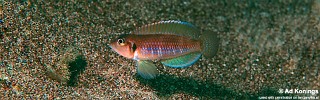
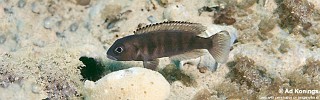
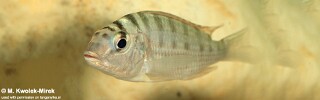
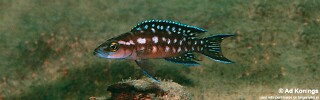
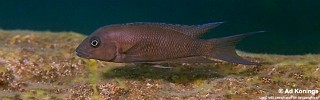
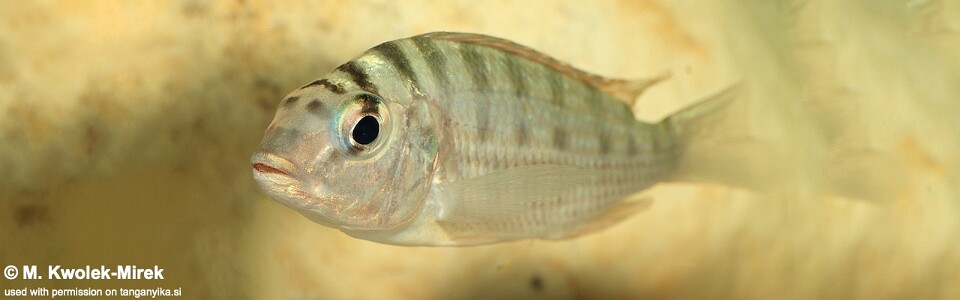




Photo gallery