Strictly bound to rocky habitats from 3 to at least 45 meters depth.
The species inhabits dark, cave-like structures formed by medium to large rocks
piled to create deep recesses.
It is an extremely cryptic species and is rarely observed outside such shelters.
Geographic distribution:
Appears to be distributed throughout the shores of Lake Tanganyika
wherever suitable rocky habitat is present.
Typical adult size:
Maximum size in the wild is about 20 cm.
There are indications that individuals may grow somewhat larger in captivity.
Sexual dimorphism:
In many cases males are larger and may reach up to twice the body mass of females.
Recommended aquarium size:
Minimum 500 liters.
Aquarium setup:
A very large aquarium that is heavily rockscaped is required.
Numerous caves and dark hiding places must be provided using stable rock piles.
Open areas should be limited, as the species prefers reclusive environments.
Diet:
Feeds on juvenile fish and small aquatic crustaceans and insect larvae
that inhabit its dark, cave-like biotope.
In the aquarium, high-protein foods should be offered with care
to avoid overfeeding.
Breeding:
Maternal mouthbrooder.
Produces few eggs per spawn, likely fewer than 20.
Eggs are very large, estimated to be at least 5 mm in diameter.
The brood cycle lasts approximately 25–27 days.
Aggression:
Highly territorial and aggressive toward conspecifics,
particularly between males.
Special notes:
The species shows extreme cryptic behavior and is adapted to life
at the limit of accessible rocky habitats.


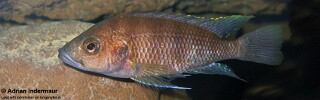



Photo gallery