Widely distributed along rocky shores of Lake Tanganyika and present at most suitable
localities around the lake, although never occurring in large numbers.
Typical adult size:
Males up to about 14 cm total length; females remain smaller, around 11 cm.
Sexual dimorphism:
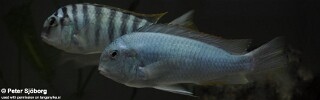
Males grow larger than females. Females permanently display vertical barring, a pattern
also seen in juvenile males.
Recommended aquarium size:
An aquarium of at least 500 liters is recommended.
Aquarium setup:
Provide a rocky setup with many stones arranged to create numerous hiding places and
passages.
Due to strong male–male aggression, only one male should be kept together with several
females.
Diet:
Herbivorous. Feeds mainly on filamentous algae and diatoms, which are nibbled and cut from
the aufwuchs.
Breeding:
Maternal mouthbrooder. Spawning takes place within the male’s territory and follows the
typical T-position and quivering anal-fin technique described for tropheines.
Sneaker males have been observed entering territories during spawning and fertilizing a
small number of eggs. Mouthbrooding females continue to feed on aufwuchs while brooding.
Aggression:
Highly aggressive, both toward conspecifics and toward other herbivorous species.
Males are strongly territorial, whereas females are solitary and do not defend feeding
territories.
Special notes:
A cichlid of the tropheine lineage with a general body profile similar to
Tropheus, but characterized by a vertical frontal profile and a narrow mouth.
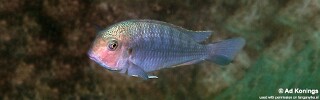
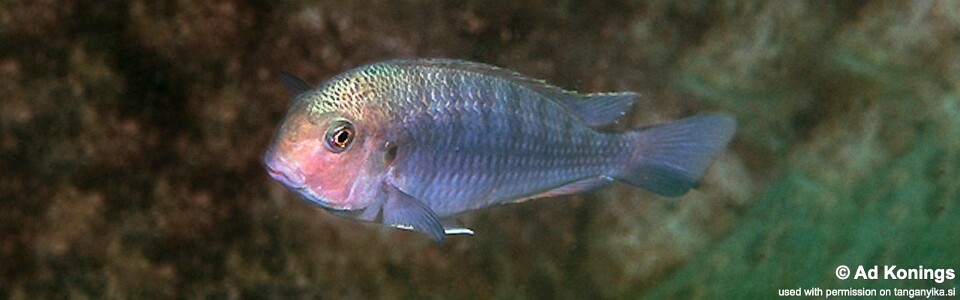
Coloration is typically cream to silvery with brown vertical bands, resembling that of
Simochromis diagramma. Distinct geographical color differences are described, with
northern males showing a greenish hue and southern males appearing more bluish.






Due to strong male–male aggression, only one male should be kept together with several females.
Sneaker males have been observed entering territories during spawning and fertilizing a small number of eggs. Mouthbrooding females continue to feed on aufwuchs while brooding.
Coloration is typically cream to silvery with brown vertical bands, resembling that of Simochromis diagramma. Distinct geographical color differences are described, with northern males showing a greenish hue and southern males appearing more bluish.
Photo gallery