Deep rocky habitat.
Observed around steep rock faces and caves.
Recorded at depths mainly between 30 and 55 meters.
Geographic distribution:
Central to eastern coast of Lake Tanganyika.
Recorded from locations including Mahale Mountains National Park,
Kekese, Luagala Point, and Segunga (Tanzania).
Typical adult size:
Around 10 cm total length.
Recommended aquarium size:
400 L
Aquarium setup:
Large aquarium with vertical rock structures and open water
for midwater swimming.
Kept successfully together with other Tanganyikan cichlids.
Requires good water quality and ample swimming space.
Diet:
Accepts a wide range of foods.
Feeds on Artemia (nauplii and adults), Daphnia, Cyclops,
frozen foods, flakes, and soft pellets.
Breeding:
Maternal mouth-brooder.
Males court females at near-vertical rock surfaces.
Females incubate eggs for approximately 3–4 weeks.
Reported brood sizes between 7 and 12 fry.
Fry accept newly hatched Artemia from the first day.
Aggression:
Generally peaceful.
Less aggressive and less greedy feeders compared to
Paracyprichromis nigripinnis.
Special notes:
Undescribed species referred to as
Paracyprichromis sp. “ammelrooyi”.
First observed in 2014 by Evert van Ammelrooy.
Lives significantly deeper than most congeners.
Exhibits more free-swimming behavior compared to
Paracyprichromis nigripinnis, which stays closer to rocks.
Early juvenile coloration shows white bars that later darken.


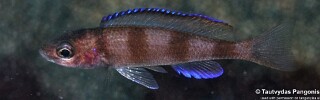
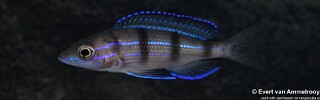

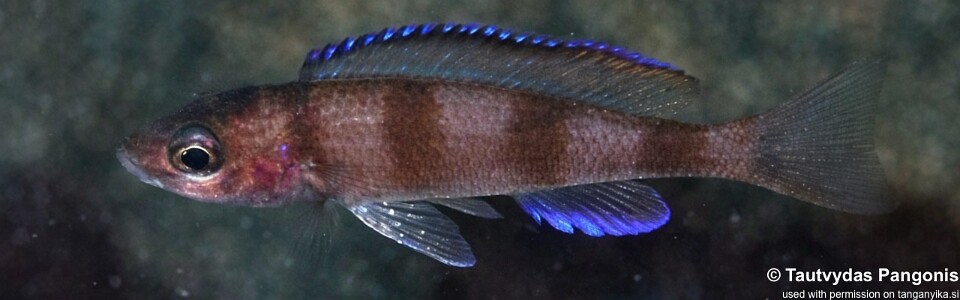



Photo gallery