tanganyika.si

Lake Tanganyika cichlids — species, locations & maps

Lake Tanganyika cichlids — species, locations & maps
By genera By locations Locations Maps Posters Interactive map
Haplotaxodon trifasciatus.jpg Haplotaxodon trifasciatus 'Burundi'.jpg Haplotaxodon trifasciatus 'Cape Kachese'.jpg Haplotaxodon trifasciatus 'Jakobsen's Beach'.jpg
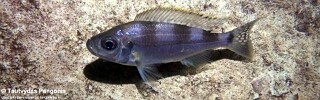
Previous pageNext pageHaplotaxodon trifasciatus (Burundi)
Tribe / Genus: Perissodini / Haplotaxodon
Type locality: Nkumbula Island, Lake Tanganyika, Zambia, 30 m.
Biotope: Open water above rocky substrates. Occurs in the upper layers of open water, generally at depths down to about 20 m.
Geographic distribution: Known from Nkumbula Island (Mbita / Crocodile Island) (Zambia), as well as Cape Muzimu, Bemba and Lusombe near Yungu in the Democratic Republic of Congo.
Typical adult size: Up to about 26 cm TL. Standard length up to 173 mm (type material); average adult size around 20 cm TL, with females slightly smaller than males.
Sexual dimorphism: Very weak. Sexes are similar in appearance; males grow slightly larger than females.
Recommended aquarium size: At least 600 L.
Aquarium setup: Fine sand substrate with a few larger rocks placed on the bottom. Provide ample open swimming space. Although generally peaceful, this species should not be kept with very small Tanganyikan cichlids, which may be preyed upon.
Diet: Carnivorous predator. Feeds mainly on small fishes and zooplankton. In the aquarium readily accepts a wide range of live and frozen foods.
Breeding: Biparental mouthbrooder. Females incubate the brood for approximately 16–18 days. Pairs separate from groups to spawn. Eggs and early larvae are incubated mainly by the female; after the first release, the approximately 9 mm fry (10–12 days after spawning) often take refuge primarily in the male’s mouth. Clutch size usually ranges from about 100 to 200 eggs.
Aggression: Among the more peaceful Tanganyikan cichlids. Interspecific aggression is very low; intraspecific aggression is limited to mild display behavior.
Special notes: Differs from Haplotaxodon microlepis by having six or seven scale rows between the upper and lower lateral lines, three (instead of four) dark vertical bars below the dorsal fin, and 34 (rarely 35) vertebrae.

Most aquarium specimens attributed to H. trifasciatus originate from the northern part of the lake and tend to have a higher body and more intense blue and yellow coloration than specimens from southern Tanzania or Zambia.
Tribe / Genus: Perissodini / Haplotaxodon
Type locality: Nkumbula Island, Lake Tanganyika, Zambia, 30 m.
Biotope: Open water above rocky substrates. Occurs in the upper layers of open water, generally at depths down to about 20 m.
Geographic distribution: Known from Nkumbula Island (Mbita / Crocodile Island) and Pemba (Zambia), as well as Cape Muzimu and Lusombe near Yungu in the Democratic Republic of Congo.
Typical adult size: Up to about 26 cm TL. Standard length up to 173 mm (type material); average adult size around 20 cm TL, with females slightly smaller than males.
Sexual dimorphism: Very weak. Sexes are similar in appearance; males grow slightly larger than females.
Recommended aquarium size: At least 600 L.
Aquarium setup: Fine sand substrate with a few larger rocks placed on the bottom. Provide ample open swimming space. Although generally peaceful, this species should not be kept with very small Tanganyikan cichlids, which may be preyed upon.
Diet: Carnivorous predator. Feeds mainly on small fishes and zooplankton. In the aquarium readily accepts a wide range of live and frozen foods.
Breeding: Biparental mouthbrooder. Females incubate the brood for approximately 16–18 days. Pairs separate from groups to spawn. Eggs and early larvae are incubated mainly by the female; after the first release, the approximately 9 mm fry (10–12 days after spawning) often take refuge primarily in the male’s mouth. Clutch size usually ranges from about 100 to 200 eggs.
Aggression: Among the more peaceful Tanganyikan cichlids. Interspecific aggression is very low; intraspecific aggression is limited to mild display behavior.
Special notes: Differs from Haplotaxodon microlepis by having six or seven scale rows between the upper and lower lateral lines, three (instead of four) dark vertical bars below the dorsal fin, and 34 (rarely 35) vertebrae.

Most aquarium specimens attributed to H. trifasciatus originate from the northern part of the lake and tend to have a higher body and more intense blue and yellow coloration than specimens from southern Tanzania or Zambia.

Photo: © Nelson Mangana
tanganyika.si
Lake Tanganyika cichlids — species, locations & maps.
All images are used with permission of the authors. Unauthorized use is prohibited.
Quick links
By genera By locations Locations Maps Posters Interactive map
Contact
Email Facebook Instagram
© tanganyika.si