Lukuga River, near Albertville (Kalemie), Democratic Republic of Congo.
Biotope:
Primarily inhabits riverine environments, swampy areas, and river mouths connected to Lake Tanganyika.
Usually found in slow-flowing waters with submerged vegetation rather than along open rocky lake shorelines.
Geographic distribution:
Lake Tanganyika basin. Occurs mainly in tributaries, river mouths, and swamp systems associated with the lake,
including the Malagarasi and Ruzizi river systems, as well as areas around Bujumbura and Gatumba.
Typical adult size:
Up to about 12 cm total length.
Sexual dimorphism:
Sexual dimorphism is weak. Males may grow slightly larger than females,
but external differences in coloration and fin shape are minimal.
Recommended aquarium size:
200 L
Aquarium setup:
Provide open swimming space combined with areas of dense vegetation or root structures.
Use a sand or fine gravel substrate and include calm zones with gentle water movement.
Suitable tankmates are peaceful to moderately assertive species with similar environmental requirements.
Diet:
Omnivorous. Feeds on small invertebrates such as snails, insects, and crustaceans, as well as plant material.
In aquaria, it readily accepts a wide range of quality dry, frozen, and live foods.
Breeding:
Mouthbrooder. After spawning, the female collects and incubates the eggs in her mouth.
Fry are released fully formed and are guarded for a short period after release.
Aggression:
Generally peaceful outside the breeding period.
Territorial behaviour may increase temporarily during spawning.
Special notes:
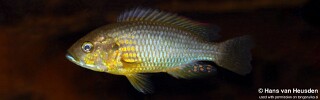
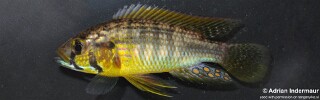
Often referred to as the “bluelip haplo” due to bluish coloration around the lips in some specimens.
It represents a Tanganyika basin haplochromine adapted to riverine and marginal lake habitats
rather than true lacustrine environments.



Suitable tankmates are peaceful to moderately assertive species with similar environmental requirements.
Photo gallery